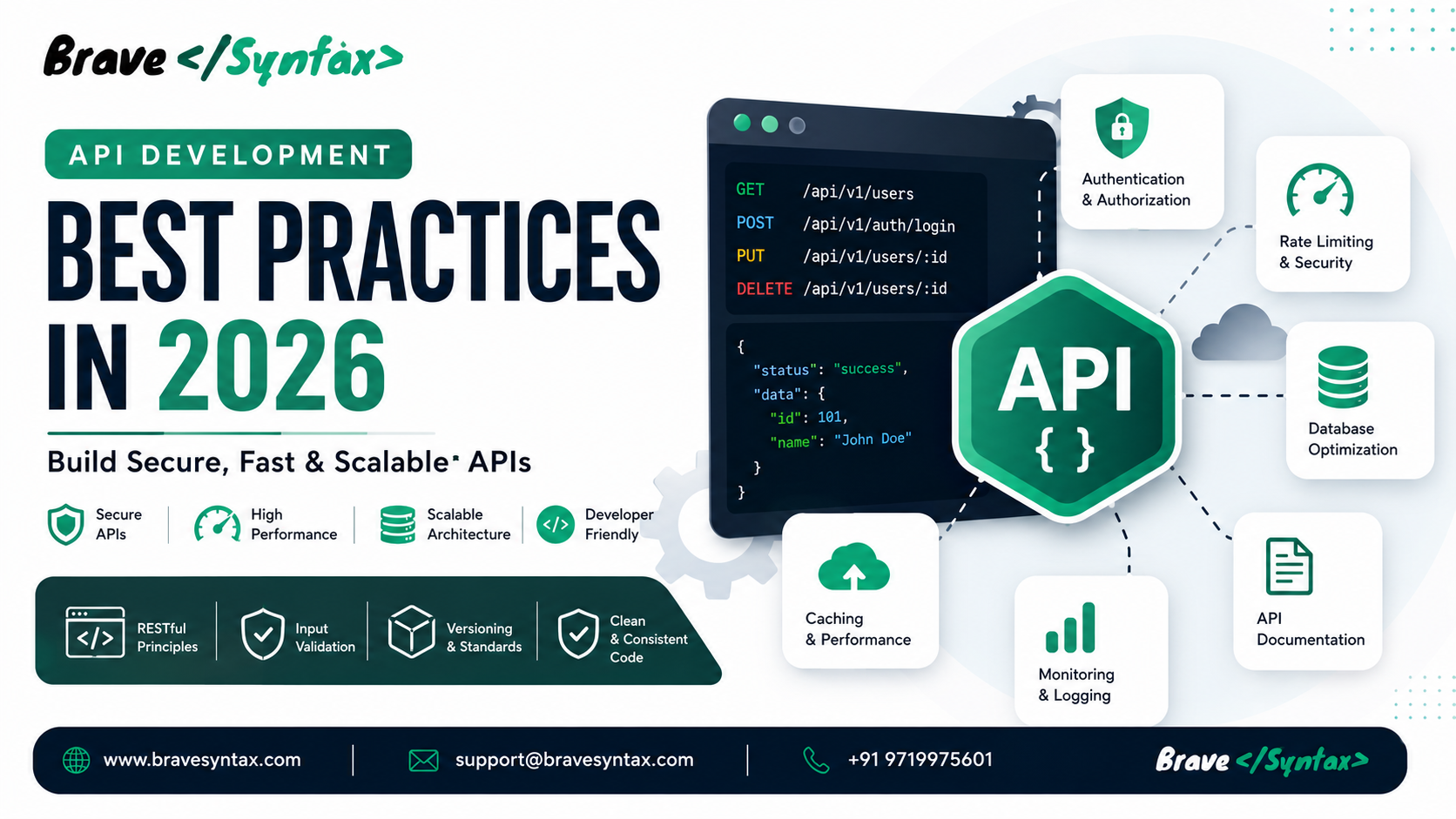
API Development Best Practices in 2026: How to Build Secure, Fast and Scalable APIs
Modern web applications rely heavily on APIs. Whether you're building a SaaS platform, e-commerce website, mobile application, CRM, ERP, or AI-powered product, APIs serve as the backbone of communication between systems.
However, creating an API that simply works is not enough. Developers in 2026 must focus on security, scalability, performance, maintainability, and developer experience.
In this guide, we'll explore the most important API development best practices that every backend developer should follow.
Table of Contents
- What is an API?
- API Naming Conventions
- REST API Best Practices
- Authentication & Security
- Rate Limiting
- Database Optimization
- Redis Caching
- API Versioning
- API Documentation
- Testing APIs
- Recommended Resources
Recommended Learning Resources
Official Documentation
- Node.js Documentation
- Express.js Documentation
- MongoDB Documentation
- PostgreSQL Documentation
- Redis Documentation
- JWT Documentation
- Swagger Documentation
- Docker Documentation
Recommended YouTube Channels
What is an API?
An API (Application Programming Interface) allows different software systems to communicate and exchange data efficiently.
Common examples include:
- Payment Gateway APIs
- Authentication APIs
- Social Media APIs
- E-Commerce APIs
- AI & Machine Learning APIs
1. Use Clear and Consistent API Naming Conventions
API endpoints should be predictable and easy to understand.
Good Example:
/api/users
Bad Example:
/getUserData
Use nouns instead of verbs and maintain consistent URL structures throughout your application.
2. Follow REST API Best Practices
- GET - Retrieve Data
- POST - Create Data
- PUT - Update Data
- PATCH - Partial Update
- DELETE - Remove Data
Following REST principles improves API consistency and usability.
3. Validate Every Request
Never trust user input.
- Required Fields
- Email Validation
- Password Validation
- Input Length Validation
- Data Type Validation
Validation prevents security vulnerabilities and improves data quality.
4. Implement JWT Authentication
Authentication is critical for protecting API resources.
- JWT Authentication
- OAuth 2.0
- API Keys
- Session Authentication
JWT remains one of the most widely used authentication methods in modern applications.
5. Use Proper HTTP Status Codes
- 200 - OK
- 201 - Created
- 400 - Bad Request
- 401 - Unauthorized
- 403 - Forbidden
- 404 - Not Found
- 500 - Internal Server Error
Meaningful status codes simplify debugging and improve API usability.
6. Implement API Rate Limiting
Rate limiting protects your application from abuse and excessive requests.
Benefits:
- Improved Security
- Reduced Server Load
- Better Stability
- Enhanced User Experience
7. Optimize Database Queries
- Use Indexes
- Implement Pagination
- Avoid N+1 Queries
- Reduce Unnecessary Database Calls
- Optimize Aggregations
Database optimization directly impacts API performance.
8. Implement Redis Caching
Caching significantly improves API response times.
- Redis
- Memory Cache
- CDN Caching
Caching reduces database load and increases scalability.
9. Version Your APIs
Versioning helps maintain backward compatibility.
/api/v1/users/api/v2/users
This ensures older applications continue working after updates.
10. Create Comprehensive API Documentation
Well-documented APIs improve adoption and reduce development time.
- Swagger/OpenAPI
- Postman Collections
- Redoc
11. Monitor API Performance
Track key metrics:
- Response Time
- Error Rate
- Traffic Volume
- Database Performance
- Server Health
Popular tools include Grafana, Prometheus, and New Relic.
12. Write Automated Tests
- Unit Testing
- Integration Testing
- API Testing
Recommended tools:
- Jest
- Supertest
- Postman
Common API Development Mistakes
- No Authentication
- Poor Documentation
- No Validation
- Slow Queries
- No Rate Limiting
- Improper Error Handling
- Hardcoded Secrets
Recommended Backend Stack for 2026
- Node.js
- Express.js
- MongoDB
- PostgreSQL
- JWT Authentication
- Redis
- Swagger
- Docker
Final Thoughts
Building modern APIs requires more than connecting endpoints to a database. Developers must focus on security, performance, scalability, and maintainability.
By following these API development best practices, you'll build production-ready APIs that are secure, reliable, and future-proof.
At BraveSyntax, we build secure, scalable, and high-performance web applications, APIs, and digital solutions for businesses worldwide.
🌐 https://www.bravesyntax.com
📧 support@bravesyntax.com
📞 +91 9719975601